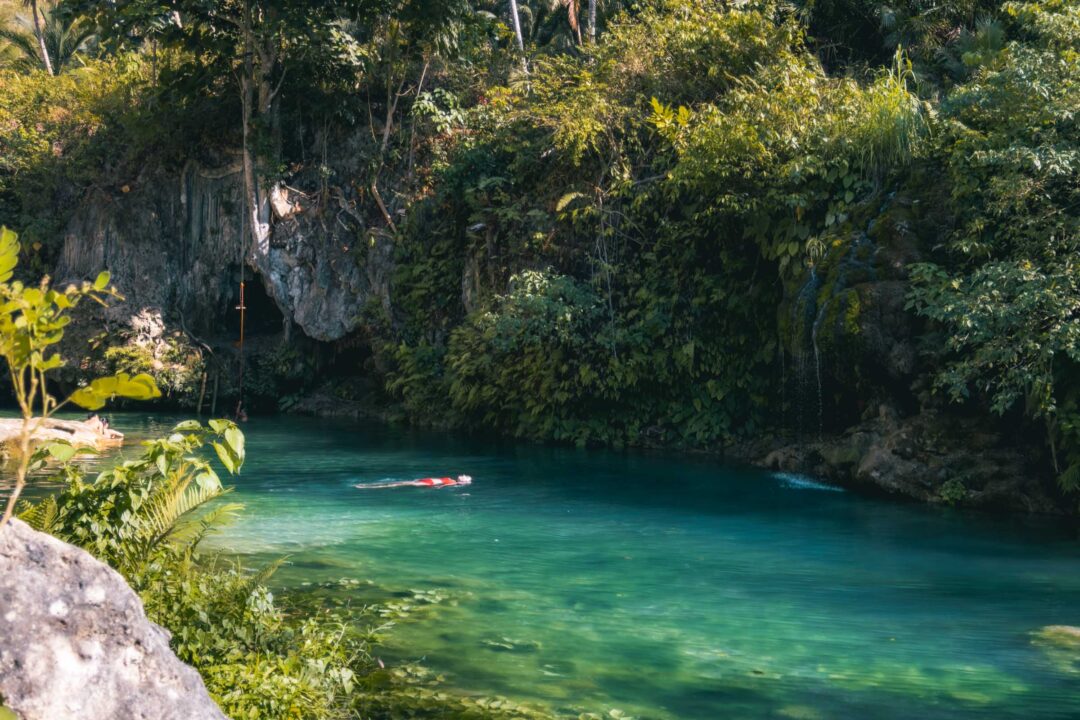
Lusno Falls is one of those spots where you get to see a different side of the Philippines.
It’s tucked away behind a local farm, and to get there we walked along trails between farm plots, saying ‘hi’ to the pigs and cows along the way. It’s not a place many tourists visit.
The best part is that Cambanog Falls is just a short distance away, so you can explore both these waterfalls in one trip.
In this guide, I’ll share everything you need to know before visiting Lusno Falls in Cebu including how to get there and what to expect when you arrive.
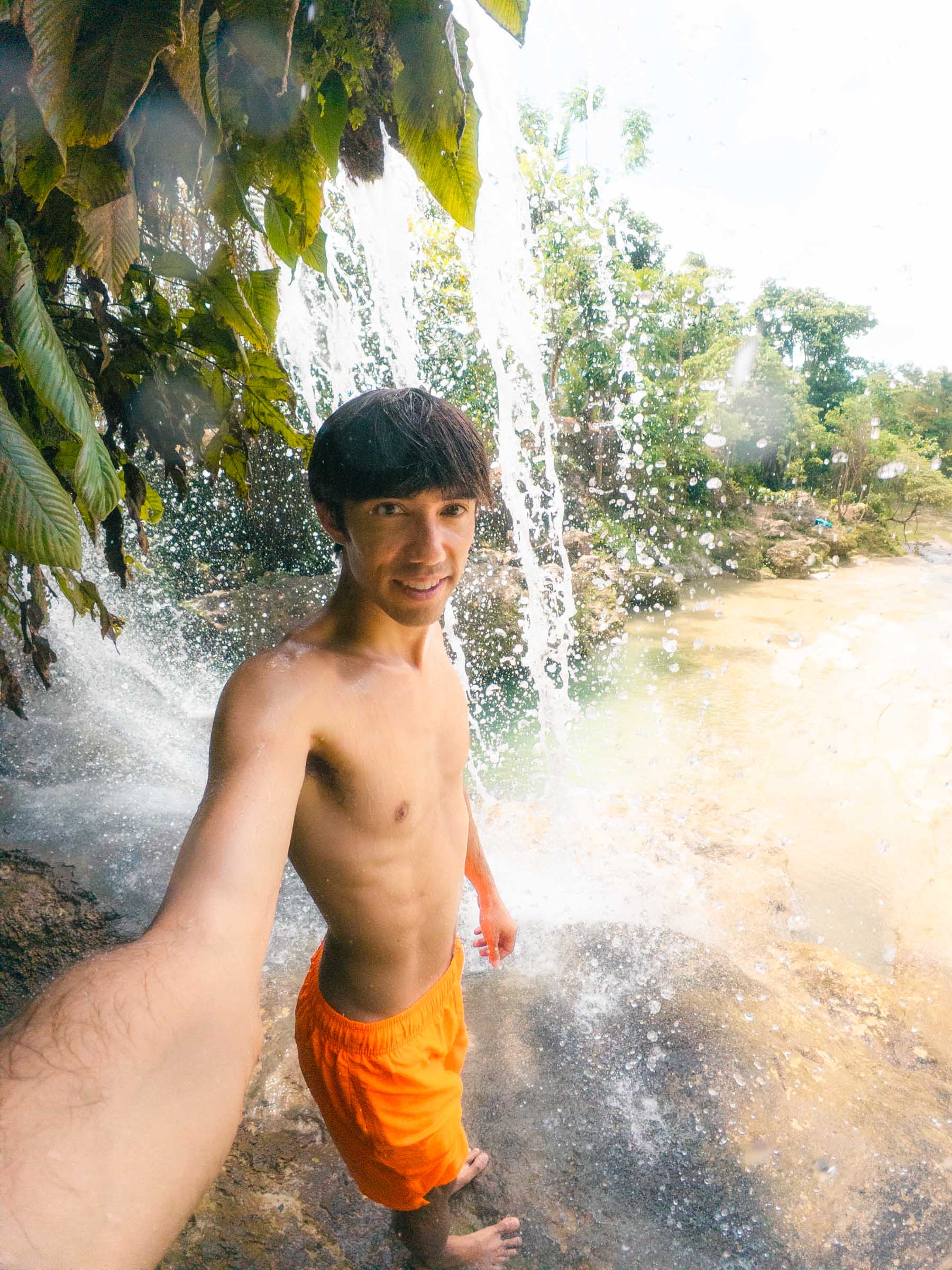
Lusno Falls Complete Guide
Lusno Falls is unlike most other waterfalls in Cebu and is different in almost every way.
First of all, while many of the island’s famous waterfalls lie to the south of Moalboal, Lusno Falls is tucked away in the north, far from the usual tourist routes.
Its setting is also unique. Instead of being a well-known attraction, Lusno Falls is hidden behind a family farm in the countryside. It doesn’t have a big commercial entrance. In fact, when we first pulled up we were a bit confused whether we were in the right place.
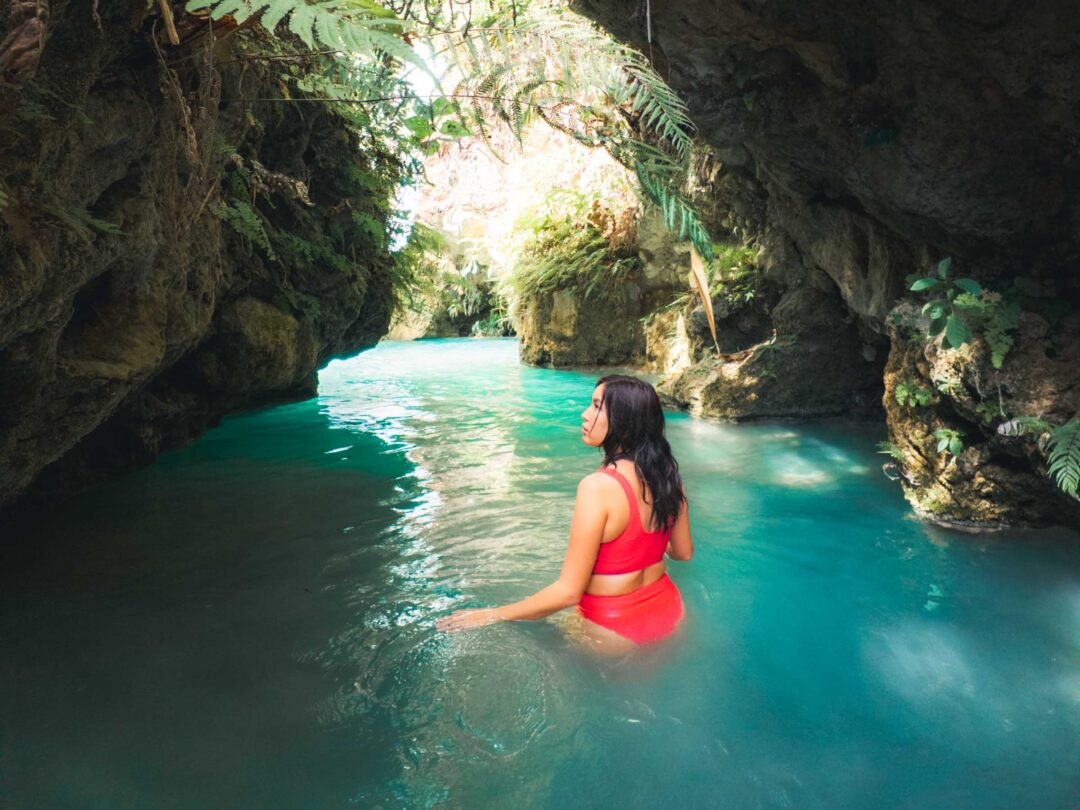
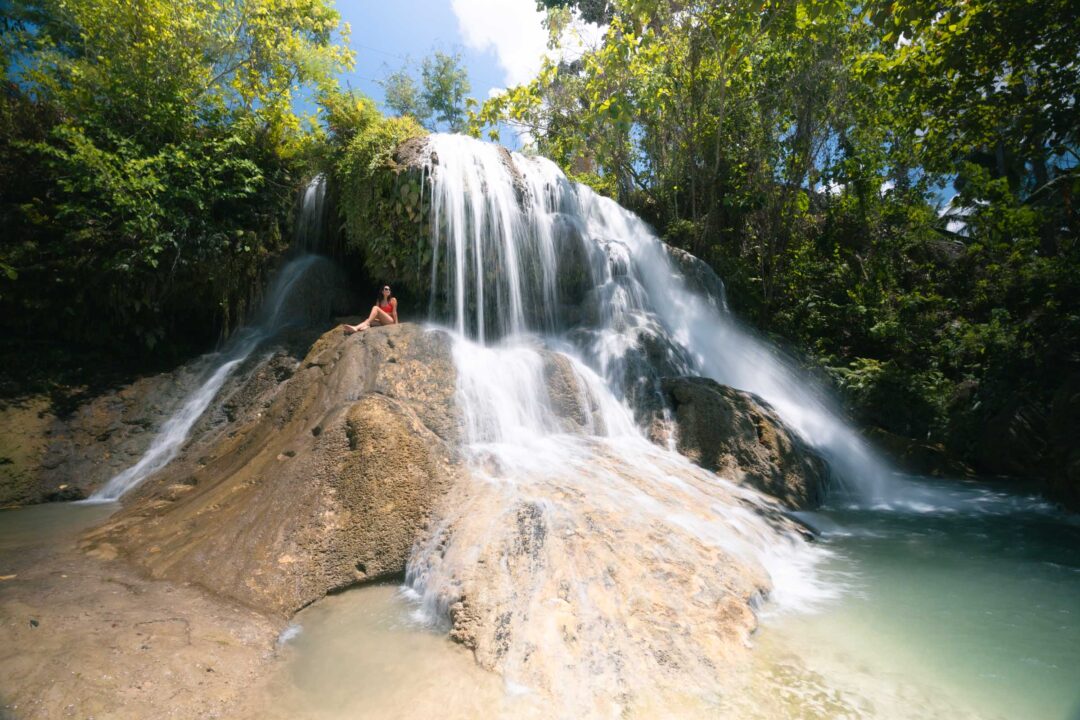
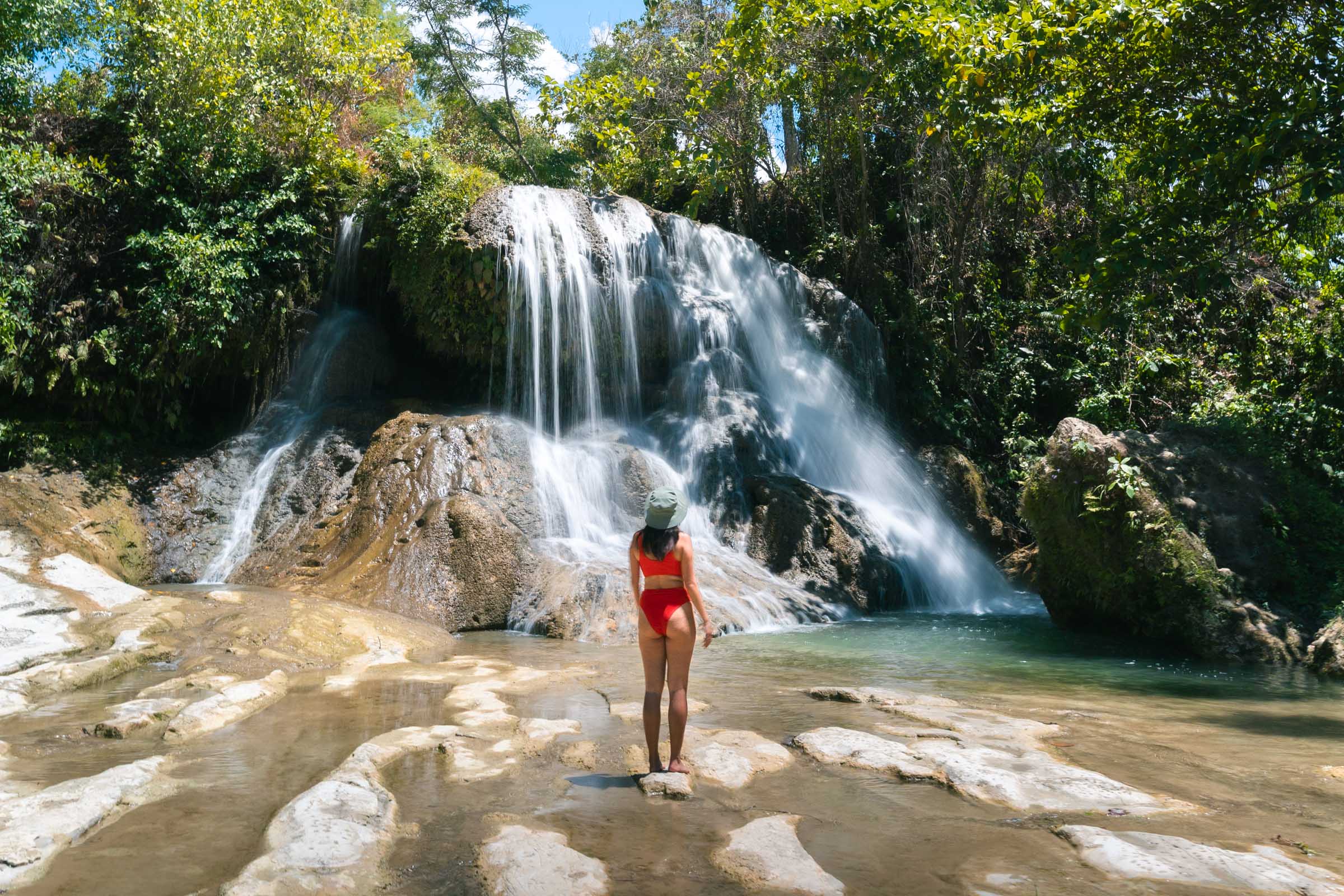
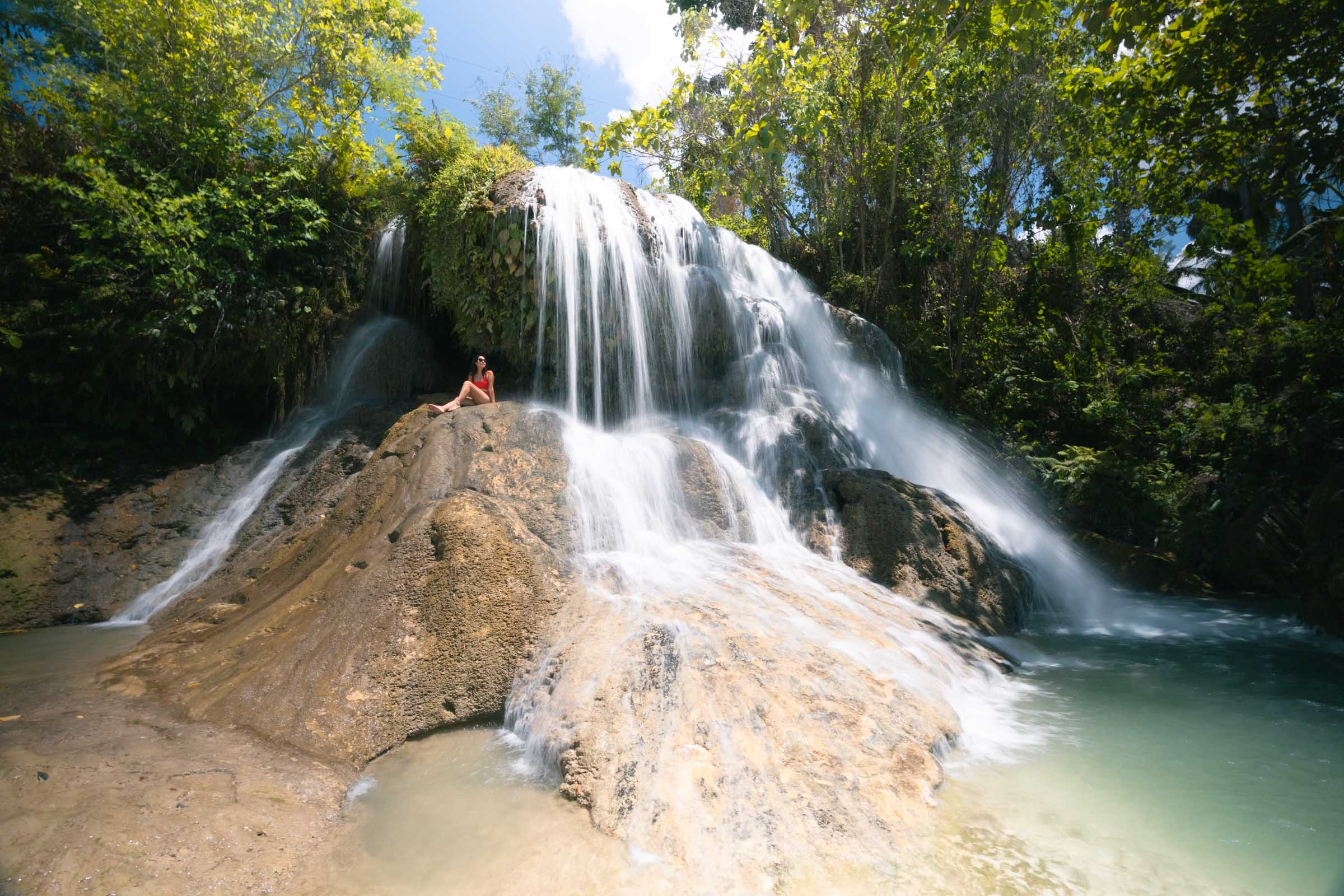
Even the waterfall itself stands out. Instead of plunging into a deep basin, Lusno cascades over a limestone rock face into a wide, shallow river. The water spreads out over smooth stone, creating a thin layer rather than the rushing streams you’ll find at most other Cebu waterfalls.
What really surprised us was how much there is to do at Lusno Falls. You can sit in its shallow pools, climb up the waterfall for a different perspective, explore the partially submerged cave under the falls, or even take a small leap into the waterfall’s shallow basin.
- Lusno Falls entry fee: 50 pesos per person
- Lusno Falls parking fee: 20 pesos per motorbike

How to get to Lusno Falls
Lusno Falls is located in the Ronda area of Cebu. It’s in the opposite direction of most of the other waterfalls in Cebu. It’s not often visited by tourists, so the best way to get there is by motorbike.
We expected rough, unpaved roads on the way to Lusno Falls. But to our surprise, most of the route had been recently repaved. The ride was smooth, with hardly any traffic—just the occasional passing motorbike and views of rolling hills in the Cebu countryside.
When we got to the turn-off road, we came across a small entry booth with a sign for Lusno Falls. We stopped to pay the entrance fee, but the attendant was nowhere to be found. After waiting a bit, we slipped our entry fee inside the notebook on the table and continued on.
The road eventually ended at a house, which also served as the parking area for visitors. Just keep an eye out for the Lusno Falls signs along the way—you won’t miss it.

Lusno Falls: Our Experience
We pulled up to a small house at the end of the road and found a sari-sari store selling snacks.
We told the woman at the sari-sari window we were there to visit Lusno Falls and after collecting our parking fee she offered us a guide, which we declined.
But, as is often the case in the Philippines, we got a guide anyway, and as we started down the trail a boy named Jar (pronounced Jay R) followed led the way.
Looking back, we’re glad we got a guide, even though we initially didn’t want one. The trail to Lusno Falls, while short, winds through farmland and small plots of land, making it confusing to navigate.
Luckily for us, we were in Jar’s own neighborhood. He grew up on this very farm, knew everyone in the area, and led us through the maze of farm trails without skipping a beat.

The walk to Lusno Falls was unexpectedly scenic. We passed through fields, stopped to look at grazing farm animals, and got a real sense of the slow-paced life in the Philippine countryside. Before long, the trail opened up, and we caught our first glimpse of Lusno Falls from above.

The waterfall spilled over a limestone cliff, cascading into a shallow basin before spreading across a wide, flat rock surface. Unlike most waterfalls that feed into deep pools or rivers, Lusno Falls created a thin, glassy layer of water that skimmed over a smooth stone surface as it flowed downstream.
As I stepped into the river, I realized just how unique this place was. The water barely reached our ankles in most areas, with just a small layer of water flowing across the surface.
And thanks to Jar, he showed us all the spots at Lusno Falls. He pointed out different angles for photos, so we spent a few moments just soaking it in and capturing the scene.

Then it was time to swim. Jar led us to an overhang beneath the falls, where he pointed out a hidden cave, partially submerged behind the curtain of water. Something I would have never found without a guide.


I climbed up the side of the waterfall and stood on a flat section right in the middle of it, surrounded by overhanging plants. For a moment, it felt like I had my own little hideaway beneath the falls.

Not long after, a group of local kids arrived. Without hesitation, they started scaling the side of the waterfall and launching themselves off the side of the falls over and over again.
One kid in particular had a mischievous grin. Every time he jumped, he’d lock eyes with me and smirk, while making a goofy pose mid-air. I took it as a challenge. I climbed up, jumped, and threw in my own ridiculous pose. We went back and forth like this, each jump getting more absurd, with a new goofy pose every time. These little moments are the ones I never forget.
After a while, Jar asked if we wanted to check out Cambanog Falls. I’d never heard of it, but he told us it was nearby. I’m always up for an impromptu adventure, so we packed up our things and followed Jar deeper into the farmland, on our way to Cambanog Falls.
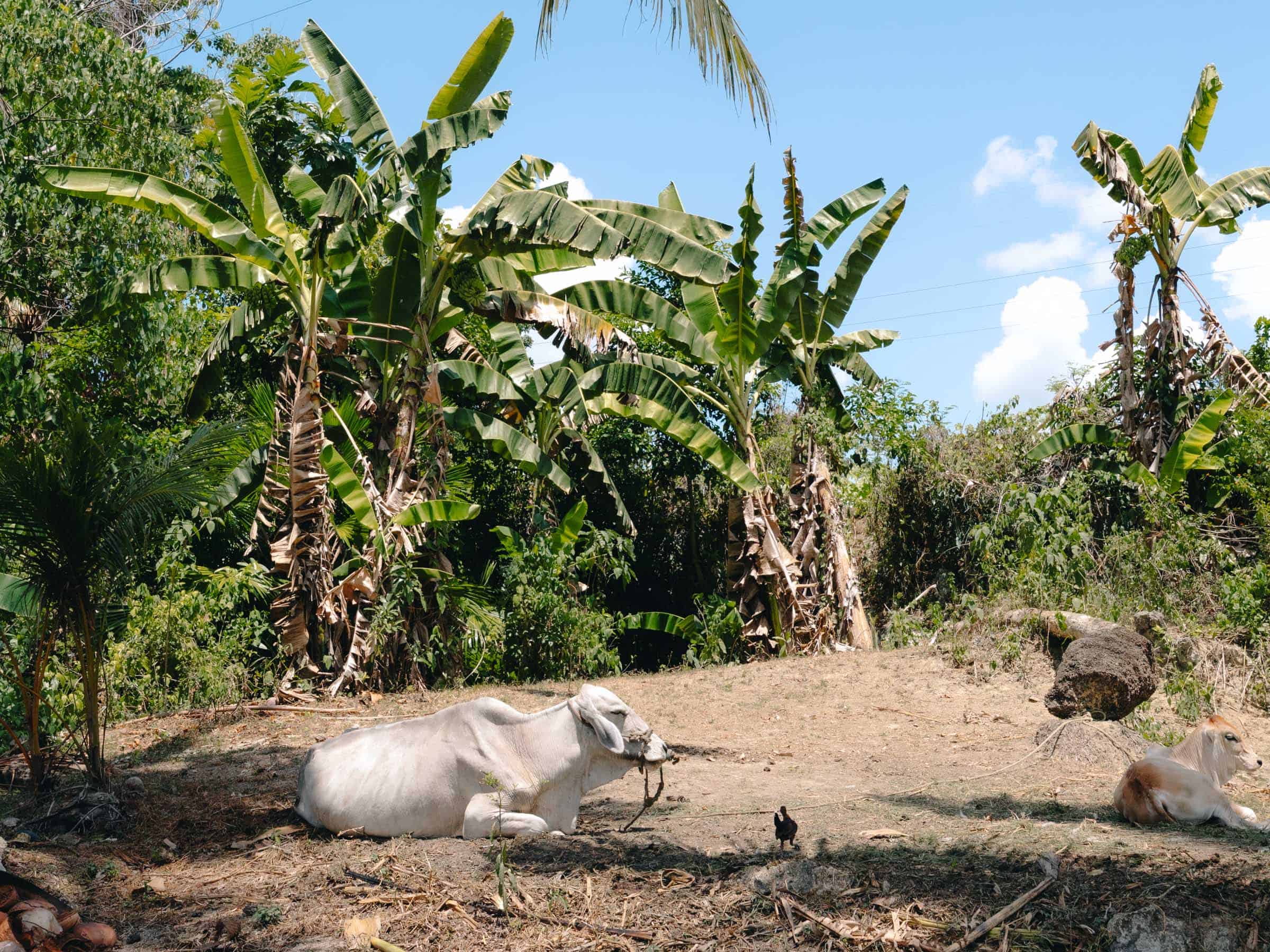
Where to Stay in Cebu
For most travelers, Moalboal is the best place to stay. It’s close to the Sardine Run, White Beach, and within range of Kawasan Falls Canyoneering.
Moalboal has a good mix of resorts, hostels, and food spots, making it a solid base for exploring Cebu.
If you’re planning to stay longer than 5 days, I recommend doing what we did by splitting your time between Moalboal and Oslob.
Oslob gives you easier access to whale shark watching, Sumilon Island, and nearby waterfalls like Tumalog and Binalayan. This way, you cut down on travel time and get to see more.
Here’s where we stayed at and recommend in Cebu:
- Moalboal: 3 Sisters Guest House 2 is just off the main strip in Moalboal, but still within walking distance of everything. We appreciated the security and cleanliness of the accommodation and ate breakfast there every morning of our stay.
- Oslob: Melronz Inn is situated a bit outside the town center, making it quieter and more relaxed. And the best part is that it’s located right on the water, with its own private ocean access.
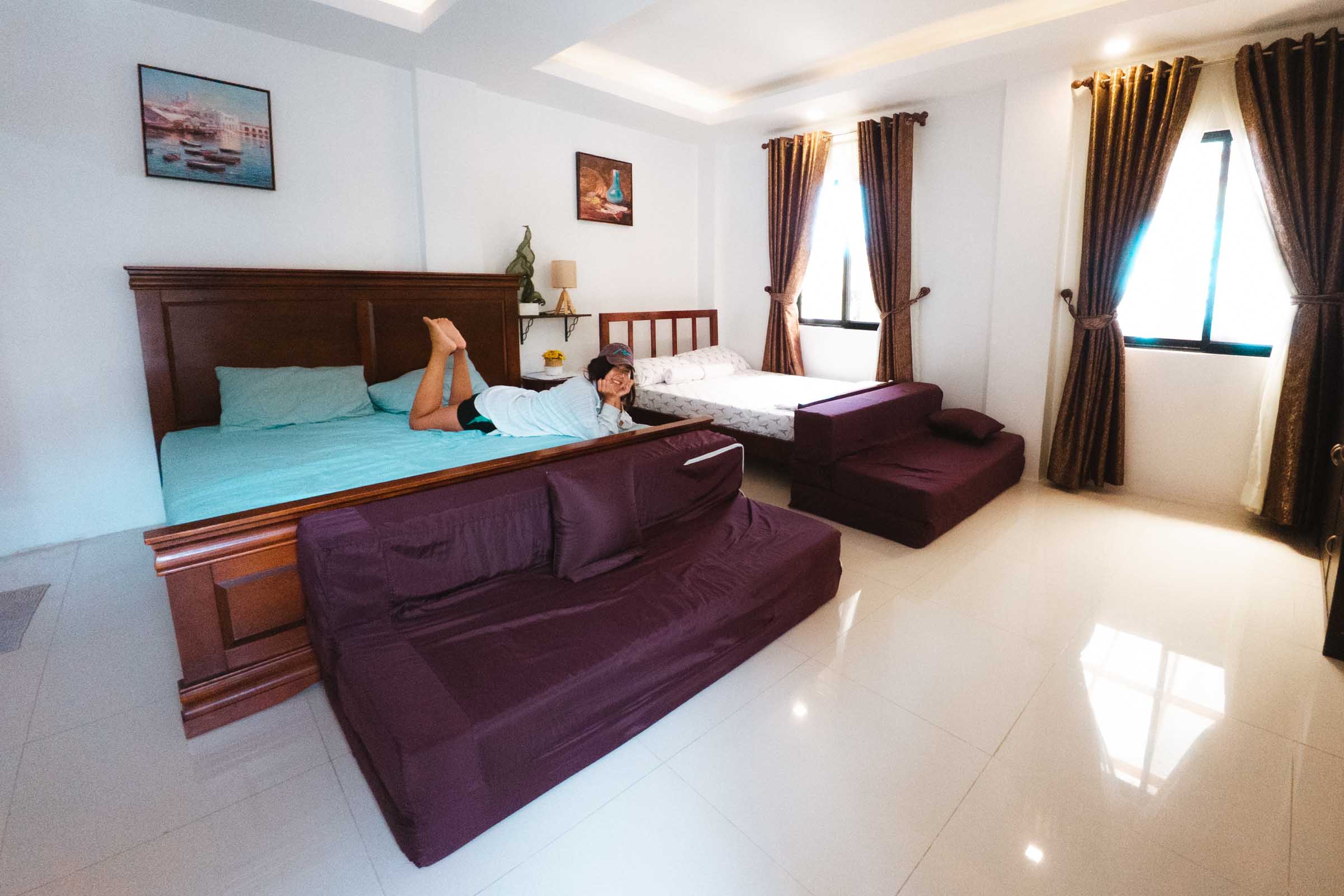
What to Pack for Cebu
- Water Shoes: If you plan to go canyoneering, a solid pair of water shoes like these are needed. If not, you can always wear crocs or even your sneakers if you don’t mind them getting wet!
- Snorkel: With sardine run in Moalboal and whale shark watching in Oslob, it helps to have your own snorkel set like this one for the best experience! Plus, you won’t need to worry about renting a snorkel, which may be of… questionable quality.
- Sunscreen: For some reason, sunscreen is expensive in the Philippines and I’ve even encountered places selling fake sunscreen that doesn’t work! So I recommend bringing your own sunscreen to Cebu.
- Dry Bag: With all the sand, salt, and water flying everywhere during our adventures, I was so glad to have a dry bag to keep all my things safe from the elements!
- Travel Towel: In my opinion, a travel towel like this one is super necessary for a trip to Cebu! It packs down nicely and was there for me anytime I went swimming, or just needed to brush sand or dirt off.
Our Free Cebu Google Maps Locations
Want a free map of all of the locations mentioned in this post? Sign up in the box below and we’ll deliver one right to your inbox, plus our top tips to help you plan your Cebu trip!
Need more Cebu travel ideas?
During our 7-day adventure in Cebu, we found some of the island’s most stunning natural wonders—milky blue waterfalls, limestone hikes, and incredible snorkeling spots. To help fellow adventurers, we’ve put together guides to the best places we found. You can check them out by clicking the links below.
- Start your planning here: Cebu Travel Guide
- Our Ultimate Guide to Cebu: 15 Incredible Things to Do in Cebu
- How to plan your Cebu vacation: Cebu 3 Day Itinerary
- Our Moalboal accommodation guide: Where to Stay in Moalboal
- Our favorite waterfall (+ secret adventure) in Cebu: Inambakan Falls
- Hike to the highest point in Cebu: Osmeña Peak
- Our favorite hike in Cebu: Casino Peak
- Our favorite day tour in Cebu: Kawasan Falls Canyoneering
- The hottest hot spring we’ve ever visited: Mainit Hot Spring
- How to see the Moalboal Sardine Run without a tour
- Oslob Whale Shark Watching Complete Guide
- How to get from Cebu City to Moalboal
- How to get from Moalboal to Oslob
- How to rent a motorbike in the Philippines
I hope you enjoyed our guide to Lusno Falls in Cebu! Feel free to leave a comment below if you have any questions 🐸