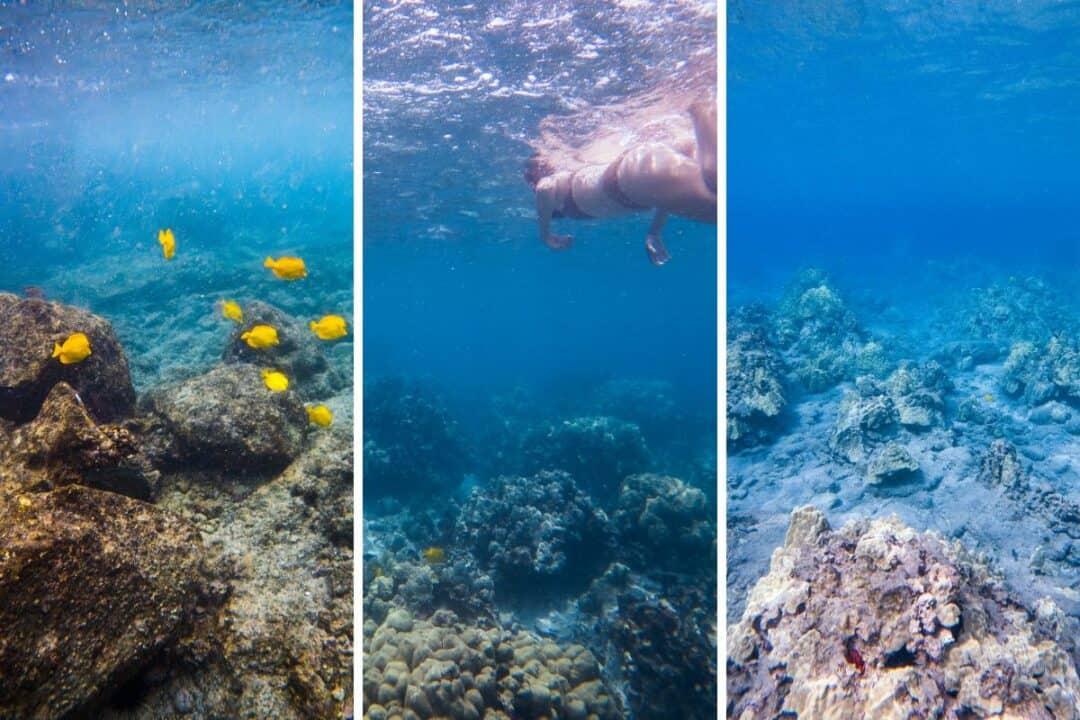
During our recent snorkeling trip to South Kona, we drove past The Painted Church several times on our way to and from the beach.
The Painted Church is hard to miss – after all, the road that it’s on is called “Painted Church Road”.

Saint Benedict’s Painted Church is perhaps the most famous church in Kona.
From the roadside, The Painted Church looks like any other old church – A white, wooden building with a bell tower and arched windows.
That might make you think: Why is a plain white building called “The Painted Church”?
That’s definitely what we were thinking – until we stepped inside.

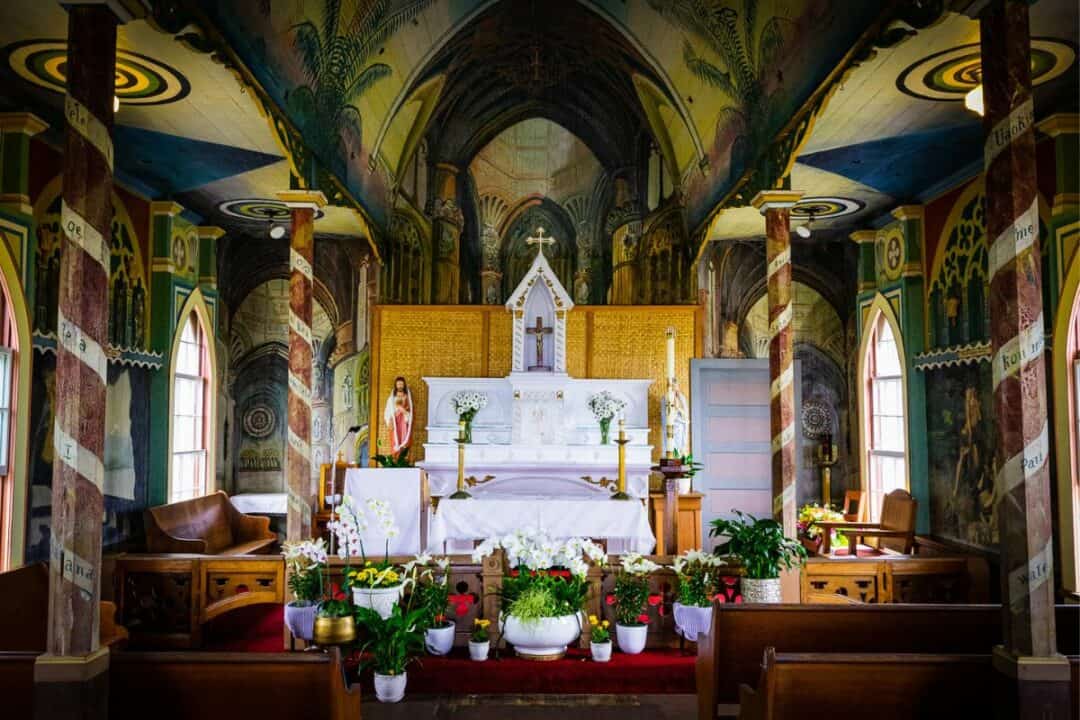
What we found inside of The Painted Church is straight out of a fairytale – every inch of its walls and ceiling is adorned with colorful paintings.
Why Is the Inside of the Church Painted?
Upon entering the inside of The Painted Church, we were floored by the color and detail of the paint.
That got us thinking – Why is the inside of the church painted, anyway?
It turns out that story of The Painted Church is as rich as the colors of its walls.
The history of Saint Benedict’s Painted Church goes back to 1842. The church was originally constructed on the shores of Honaunau Bay near the City of Refuge, where the Puʻuhonua o Hōnaunau National Historical Park and Two Step Beach are located today.
In 1899, Father John Berchmans Velghe arrived to replace Father Aloys Lorteau, who recently passed away.
Father John saw that the economy of the area was in transition – former fishermen were leaving their oceanfront homes to move upland to work on the newly established Kona coffee farms.
Father John thought it was best to follow the people – so he decided to have the shoreline church dismantled and moved whatever pieces he could up the hill to its current location.
There Is Vivid Symbolism in All of the Church’s Paintings
Father John could not speak to the native Hawaiian people since he was new from Belgium and did not speak the local language. However, he was a self-taught artist and painted the interior walls and ceiling of the church with colorful murals and biblical scenes.
His intention was to use these colorful paintings as a visual aid for his sermons with the native Hawaiian people.
Father John painted 6 murals on the walls of the church:
- On the northern (left) walls of the church, the murals depict scenes that guide us toward a good life.
- On the southern (right) walls of the church, the murals depict scenes that help us understand death.


Father John also used vivid symbolism in his paintings.
For example, the palm fronds on the ceiling of the church differ in color depending on the direction they face: The palm fronds pointed towards the altar are green and full of life, while the palm fronds pointed away from the altar are brown and show signs of death and decay.

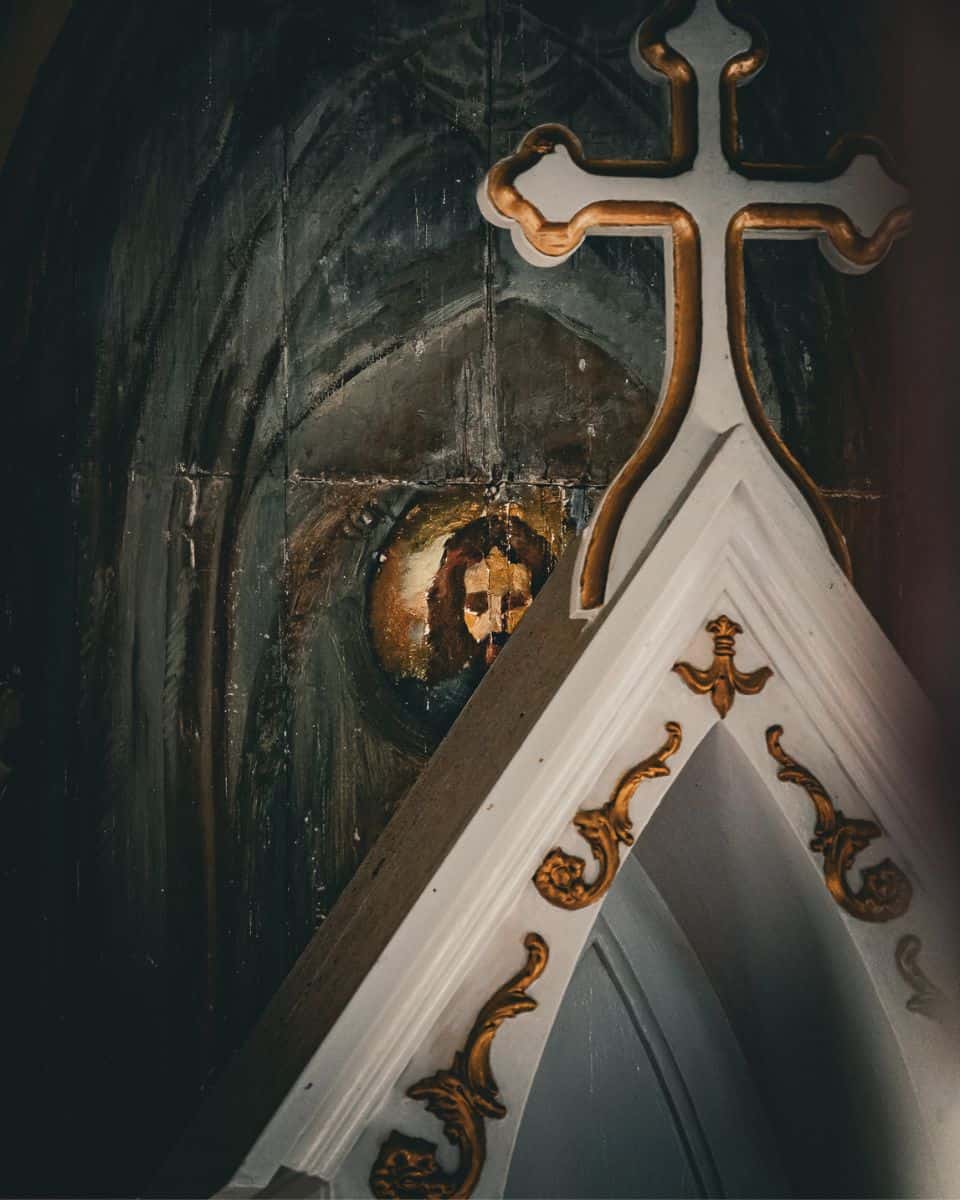
Another example of symbolism that Father John incorporated into his paintings is Jesus at the altar – or what we called “Peekaboo Jesus”.
Hidden behind the altar, Father John painted the face of Jesus. We were told that his intention is to teach everyone that Jesus is always watching, no matter where you are.
You could even say that the walls that the murals are painted on are symbolic as well.
The murals that depict scenes of life are painted on the northern wall of the church, while the murals that depict scenes of death are painted on the southern wall of the church – symbolizing the directions of heaven and hell.
The Church’s Grounds Are Mesmerizing, Too
After exploring the interior of the church, we went outside to take a look around the church’s grounds.
What we found was nothing short of a fairytale.
On the right side of the church is a short stairway that leads to a scale model of La Pietà – a statue of Mary holding Jesus’ body after he was taken down from the cross.

It was nice that the statue was in the church’s backyard – that way you could appreciate the artwork in nature, away from the other buildings on site.
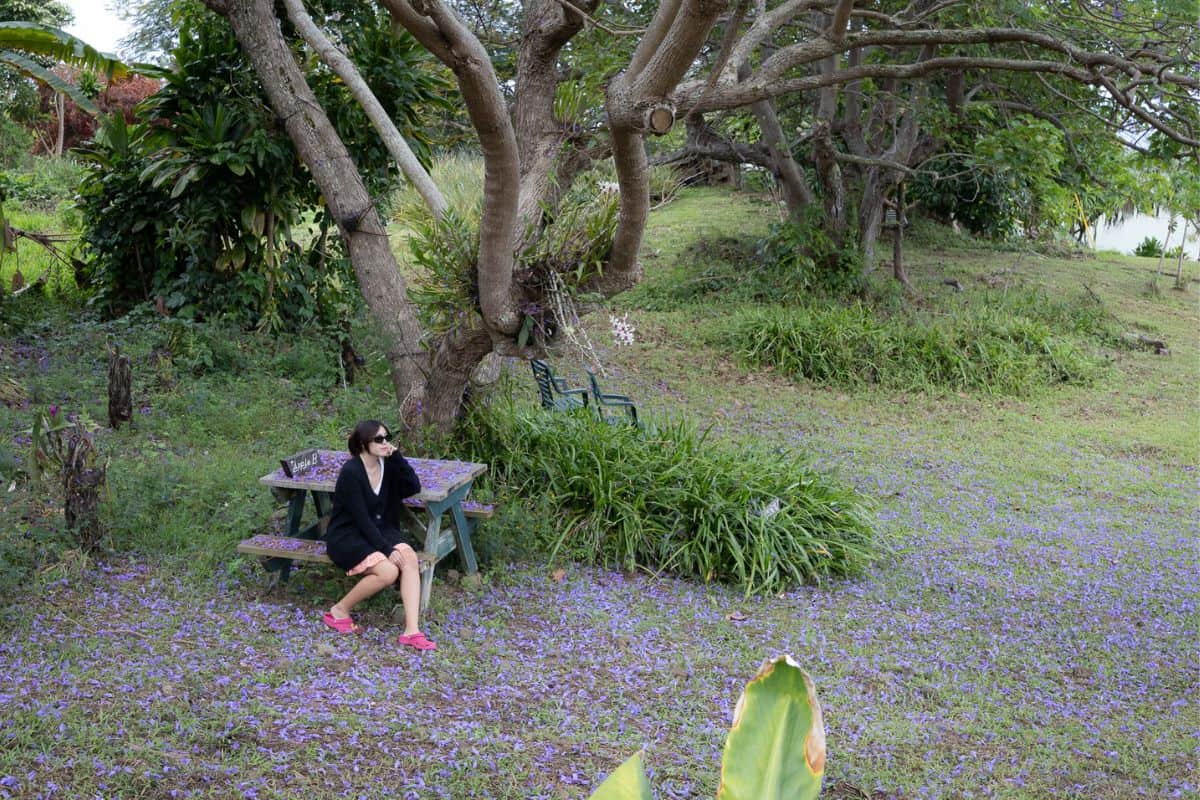
Near the statue is a park bench under a beautiful jacaranda tree. We visited in the spring, so the tree was blooming with purple flowers. The flowers falling from the tree really added to the fairytale vibe of the place.
The Painted Church Also Has Souvenirs
If you want to take a religious article home with you, The Painted Church has you covered.
There is a small donation area near the entrance to the church that has everything from keychains, bracelets, pins, and magnets. The suggested donation is $5 per article.
The church also has cold bottled water and fruit available if you’re hungry or thirsty.

St Benedict’s Painted Church Details
- Address: 84-5140 Painted Church Rd, Captain Cook, HI 96704
- Visiting Hours: Tuesday, Wednesday, Thursday: 9:30 am – 3:30 pm
- Parking: Free parking lot on site
- Restrooms: Available for use next to the parking lot
- Cost: Donations are appreciated
- Please dress respectfully since it is an active church.
- Official Website: thepaintedchurchhawaii.org